Asian Vegetable Stock
This rich Asian vegetable stock is a cornerstone recipe that enhances the flavor of numerous dishes while being an appealing choice on its own. Whether you’re preparing a warming soup or a hearty noodle dish, this versatile stock adds depth and richness. Its unique blend of vegetables and umami flavors makes it suitable for various occasions, from casual family dinners to sophisticated gatherings.
Why You’ll Love This Recipe
- Rich Flavor: This stock is packed with aromatic ingredients that create a deep, satisfying taste.
- Versatile Use: Perfect as a base for soups, stews, or even enjoyed on its own.
- Easy Preparation: With simple steps and readily available ingredients, making this stock is a breeze.
- Healthy Choice: Packed with nutrients from fresh vegetables, it offers both flavor and health benefits.
- Customizable: Feel free to adjust the ingredients based on what you have at home for a personalized touch.
Tools and Preparation
Having the right tools can make your cooking experience smoother and more enjoyable. Here are some essential items you’ll need for this recipe.
Essential Tools and Equipment
- Large stockpot
- Sheet pan
- Knife
- Cutting board
- Measuring spoons
Importance of Each Tool
- Large stockpot: Essential for simmering the stock gently over several hours to extract maximum flavor.
- Sheet pan: Perfect for roasting the napa cabbage, enhancing its sweetness and depth before adding it to the pot.
Ingredients
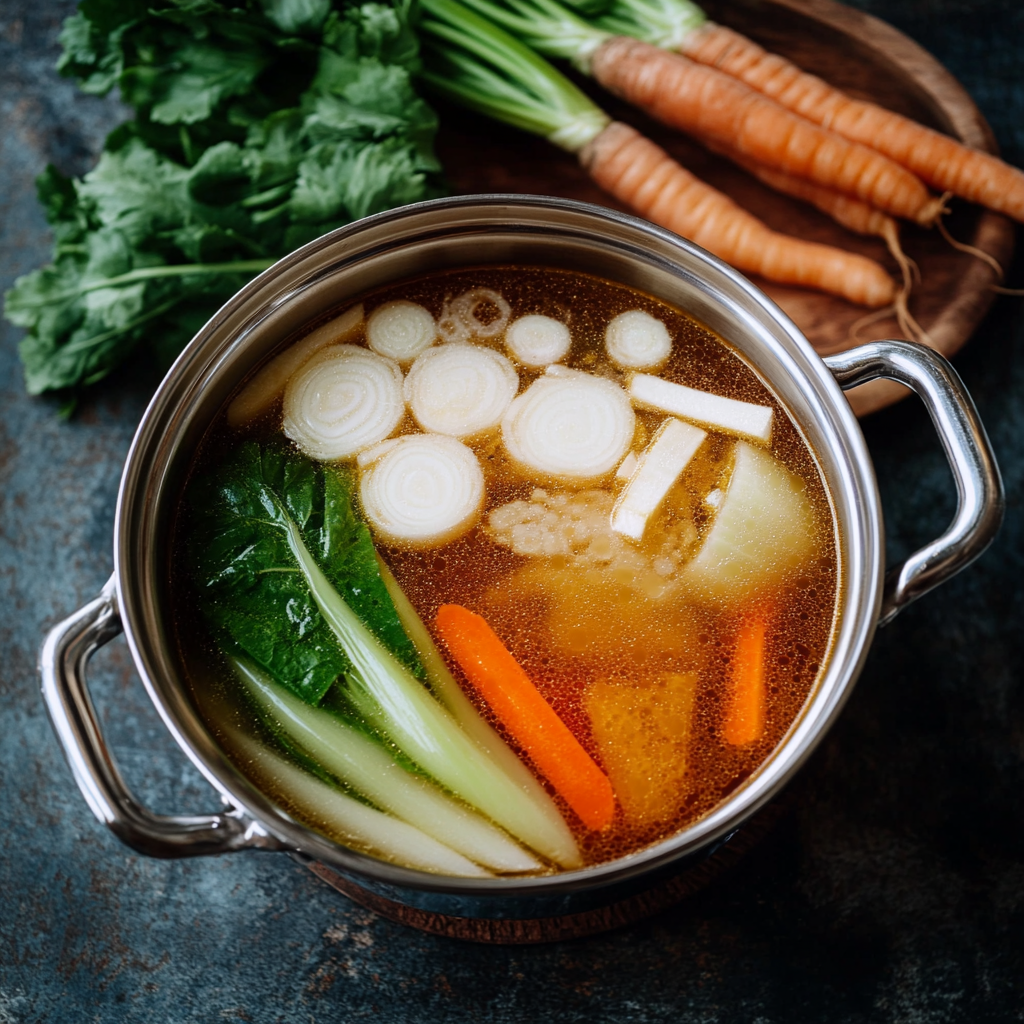
To create this flavorful Asian vegetable stock, gather the following ingredients:
Vegetables & Aromatics
- 1/2 of a napa cabbage (cut in half lengthwise)
- 2 tablespoons vegetable oil (divided)
- 7 slices ginger (20g, or 0.7 oz.)
- 2 cloves garlic (peeled and cut in half)
- 2 cubes white fermented bean curd (0.8 ounces, 23g, optional)
- 1 onion (peeled and quartered)
- 1 pound carrots (450g, peeled and cut into large chunks)
- 8 scallions (ends removed)
- 8 ounces daikon radish (225g, peeled and cut into chunks)
- 1 5×5 inch piece dried kelp (kombu) (13x13cm, rinsed)
- 16 dried shiitake mushrooms (rinsed)
Liquid
- 16 cups water (1 gallon, or about 4L)
Seasoning
- Salt to taste
How to Make Asian Vegetable Stock
Step 1: Preheat the Oven
Preheat your oven to 375 degrees F. Take your napa cabbage half and cut it in half again lengthwise. Place the cabbage on a sheet pan and drizzle lightly with vegetable oil. Roast for 25 minutes until slightly caramelized.
Step 2: Sauté Aromatics
In a large stockpot, heat 1 tablespoon of oil over medium heat. Add the ginger and garlic; cook for about 2 minutes until fragrant but not browned. If using, stir in the fermented bean curd for one additional minute.
Step 3: Combine Ingredients
Add in the onion, carrots, scallions, daikon radish, kelp, dried shiitake mushrooms, and water into the pot. When your roasted napa cabbage is ready, incorporate it into the pot as well.
Step 4: Simmer the Stock
Bring everything to a boil. Once boiling, reduce the heat to low and cover. Allow it to simmer gently for about 4 hours.
Step 5: Strain & Season
After simmering, strain the stock through a fine mesh sieve or cheesecloth into another pot or container. Season with salt to taste before serving or storing.
This Asian vegetable stock is not just an ingredient; it’s an experience that brings warmth and satisfaction to any meal!
How to Serve Asian Vegetable Stock
Asian vegetable stock is a versatile base that can elevate many dishes or be enjoyed on its own. Here are some creative ways to serve this delicious stock.
As a Warm Beverage
- Serve the stock hot in a cup for a comforting drink, especially during chilly days. It’s refreshing and packed with flavors.
In Noodle Soups
- Use the stock as a base for your favorite noodle soups. Add cooked noodles, fresh vegetables, and proteins like chicken or tofu for a hearty meal.
With Rice Dishes
- Drizzle the stock over steamed rice or use it to cook rice for added flavor. It enhances the dish with an umami touch.
As a Cooking Liquid
- Incorporate the stock in place of water when cooking grains or legumes. This adds depth to dishes like risottos or lentil stews.
In Stir-Fries
- Use the stock as a light sauce for stir-fried vegetables and proteins, giving them moisture and flavor without overwhelming them.
How to Perfect Asian Vegetable Stock
Making the perfect Asian vegetable stock requires attention to detail and quality ingredients. Follow these tips for an exceptional result.
- Choose Fresh Vegetables: Fresh produce ensures a vibrant taste. Opt for seasonal veggies for the best flavor profile.
- Roast Your Cabbage: Roasting enhances the sweetness of napa cabbage, adding depth to your stock. Don’t skip this step!
- Simmer Slowly: Allowing the stock to simmer gently extracts maximum flavor. Keep the heat low and let it work its magic over time.
- Use Quality Mushrooms: Dried shiitake mushrooms bring umami richness. Rinse them well before adding them to your pot for best results.
- Season Gradually: Start with minimal salt during cooking and adjust at the end. This way, you can control the final taste more effectively.
Best Side Dishes for Asian Vegetable Stock
Pairing side dishes with your Asian vegetable stock can create a delightful meal experience. Here are some great options:
- Vegetable Spring Rolls
Light and crispy, they make an excellent appetizer that complements the flavors of your stock beautifully. - Steamed Dumplings
Filled with vegetables or chicken, they are perfect for dipping into your savory broth. - Sesame Green Beans
Quickly sautéed green beans with sesame oil add crunch and flavor, enhancing your meal’s variety. - Fried Tofu Cubes
Crispy on the outside and soft inside, fried tofu adds protein and texture to your meal alongside the stock. - Garlic Bok Choy
Quickly stir-fried bok choy with garlic is simple yet flavorful; it’s an ideal side that pairs well with soups. - Cucumber Salad
A refreshing salad made with thinly sliced cucumbers dressed in soy sauce and vinegar adds brightness to your table. - Rice Noodle Salad
Cold rice noodle salad mixed with fresh herbs brings a lightness that contrasts nicely with warm broth-based dishes. - Pickled Vegetables
Tangy pickles provide acidity that balances out rich flavors from your Asian vegetable stock-based dishes.
Common Mistakes to Avoid
Making Asian Vegetable Stock can be straightforward, but there are some common pitfalls to watch out for. Here’s how to avoid them:
- Skipping the Roasting Step: Not roasting the napa cabbage first can lead to a less flavorful stock. Roasting enhances the sweetness and depth of flavor.
- Overcooking Vegetables: Cooking the vegetables too long can result in a bitter taste. Stick to the recommended simmering time to maintain a balanced flavor profile.
- Forgetting to Strain: Leaving solids in the stock makes it cloudy and unappealing. Always strain your stock thoroughly before use for a clear result.
- Neglecting Salt Adjustment: Adding salt too early can concentrate flavors as it simmers. Adjust seasoning at the end for better control over taste.
- Using Low-Quality Ingredients: Cheap or old vegetables will yield a bland broth. Use fresh, high-quality ingredients for the best flavors.
Storage & Reheating Instructions
Refrigerator Storage
- Store in an airtight container for up to 5 days.
- Allow the stock to cool completely before sealing and refrigerating.
Freezing Asian Vegetable Stock
- Freeze in portions using freezer-safe bags or containers.
- The stock can be stored frozen for up to 3 months.
Reheating Asian Vegetable Stock
- Oven: Preheat oven to 350°F (175°C) and reheat in an oven-safe pot covered with foil, until hot.
- Microwave: Heat in a microwave-safe bowl, stirring every minute until evenly heated.
- Stovetop: Pour into a pot and heat on medium until simmering, stirring occasionally.
Frequently Asked Questions
Here are some common questions regarding Asian Vegetable Stock:
Can I customize my Asian Vegetable Stock?
Yes! Feel free to add other vegetables like mushrooms or zucchini based on your preference.
How can I enhance the flavor of my stock?
Consider adding herbs like cilantro or basil during cooking for an extra aromatic touch.
Is Asian Vegetable Stock vegan-friendly?
Absolutely! This recipe uses only plant-based ingredients, making it suitable for vegan diets.
What dishes can I use Asian Vegetable Stock in?
This stock is perfect as a base for soups, noodle dishes, or even risottos.
Final Thoughts
Asian Vegetable Stock is an incredibly versatile and flavorful base that enhances many dishes. It’s easy to prepare and allows for endless customization—feel free to experiment with different vegetables or herbs. We encourage you to try making this stock at home; you’ll enjoy its rich taste and aroma!
Asian Vegetable Stock
Asian Vegetable Stock is a delightful and rich broth that serves as the perfect base for soups, stews, and noodle dishes. This homemade stock is not only packed with flavor from a variety of fresh vegetables and aromatics but also offers a nourishing, umami-rich experience.
- Prep Time: 15 minutes
- Cook Time: 4 hours
- Total Time: 4 hours 15 minutes
- Yield: About 8 servings (8 cups) 1x
- Category: Soup
- Method: Simmering
- Cuisine: Asian
Ingredients
- 1/2 of a napa cabbage
- 2 tablespoons vegetable oil
- 7 slices ginger
- 2 cloves garlic
- 2 cubes white fermented bean curd (optional)
- 1 onion
- 1 pound carrots
- 8 scallions
- 8 ounces daikon radish
- 1 5×5 inch piece dried kelp (kombu)
- 16 dried shiitake mushrooms
- 16 cups water
- Salt to taste
Instructions
- Preheat the oven to 375°F (190°C). Cut the napa cabbage in half lengthwise, drizzle with vegetable oil, and roast for 25 minutes until caramelized.
- In a large stockpot, heat 1 tablespoon of vegetable oil over medium heat. Add ginger and garlic; sauté for about 2 minutes until fragrant.
- Add onion, carrots, scallions, daikon radish, kelp, dried shiitake mushrooms, and water to the pot. Incorporate the roasted napa cabbage once ready.
- Bring to a boil, then reduce heat to low and cover. Let it simmer gently for about 4 hours.
- Strain the stock through a fine mesh sieve or cheesecloth into another container. Season with salt to taste before serving or storing.
Nutrition
- Serving Size: 1 cup
- Calories: 40
- Sugar: 5g
- Sodium: 90mg
- Fat: 2g
- Saturated Fat: 0g
- Unsaturated Fat: 2g
- Trans Fat: 0g
- Carbohydrates: 8g
- Fiber: 1g
- Protein: 1g
- Cholesterol: 0mg